

Collections - W
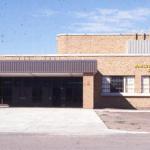
The Wahlquist Junior High School Scrapbook Collection includes scrapbooks, photographs, slides, letters, and documents related to the school's construction and early years. It also contains newspaper clippings about the school, meeting minutes from the Parent Teacher Association, and various photographs of school activities. This collection documents the history and community involvement of Wahlquist Junior High School.
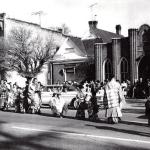
Interviews of citizens from several different walks of life conducted by Stewart Library personnel, Weber State University faculty and students, and other members of the community. The histories cover various topics and chronicle the personal everyday life experiences and other recollections regarding the history of the Weber and Davis County areas.
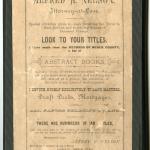
The Polk Directories for Ogden Utah span from 1870 to the present - this collection contains covers 1870-1987. The city directory will contain an alphabetical list of citizens, listing the names of the heads of households, their addresses, and occupational information. Sometimes a wife's name will be listed in parentheses or italics following the husband's.
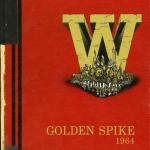
The Weber High School Yearbook documents student life, activities, and events throughout the academic year. It captures a snapshot of the school community, highlighting students, faculty, and milestones.
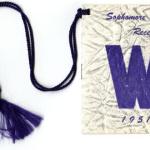
A collection of alumni publications as well as memorabilia collected by Weber Alumni.
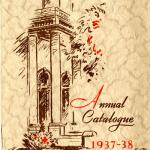
This collection consists of the annual catalogs issued by Weber through six different name changes. The first catalog was issued in 1897 for the Weber Stake Academy when the academy was affiliated with the Church of Jesus Christ of Latter-day Saints. In 1908 the school became known as the Weber Academy, and changing its name again to Weber Normal College in 1918. By 1922 the institution had changed its name to Weber College and in 1935; the church transferred the institution to the State of Utah.
Traveling photograph exhibits created by the Weber State University Archives to display the history of the institution.
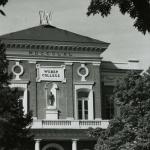
This collection comprises monographs documenting the institutional history of Weber State. It includes original publications that provide contemporary accounts and historical perspectives on significant periods in the institution's evolution. The collection also contains Weber State College...A Centennial History, which examines the institution's first century, tracing its development from Weber Stake Academy (1889) to Weber State College (1989).
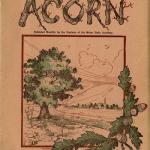
Spanning from 1904 to the Present, Weber State has many different literary publications. Some periodicals had a longer run than others, but all provide an interesting feel for the social life of their time and a glimpse into Weber's past. The publications include: The Acorn from 1904-16; The Weber Literary Journal from 1921-26; Acorn Crumbs from 1931-34; Scribulus from 1935-66 and doubling as a yearbook for several years; Transit from 1942-43; The Selector in 1948; The New Touch in 1948; Probe from 1968-72; Kaleidoscope in 1968; and The Aardvark Review from 1978-80.
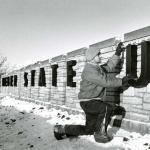
The Weber State Oral History Project began conducting interviews with key Weber State faculty, administrators, staff and students from 1970 to the present. The program focuses primarily on obtaining a historical record of the school along with exploring the many struggles of the institution from a two-year college, four-year college, and finally to the process of achieving university status.
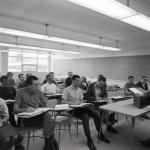
Interviews by students working with several different professors on the Weber State campus on a variety of subjects.
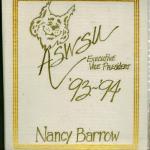
The Weber State University Scrapbook Collection features scrapbooks documenting student life and campus traditions, including sorority activities, the marching band, and other aspects of Weber history. These materials highlight the social, cultural, and historical experiences that have shaped the university community.

The Weber State University Storytelling Festival was implemented by the Friends of the Stewart Library in 1992. The library sponsored and managed the annual festival until 1998, when the festival was moved to the Department of Teacher Education, with the Library continuing as a sponsor. The three-day festival entails storytellers from all over the nation, including youth storytellers. The events are made up of workshops and presentations, a fund-raising banquet, and a wrap-up of wonderful stories from gifted performers.

This collection consists of theses and projects for various master's programs at Weber State University.
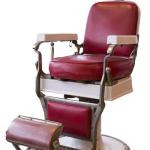
Digital artifact museum which documents the daily life of Utahans in all their diversity.
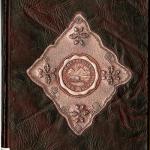
The Weber State Yearbooks span the years 1905 to 1982. The yearbooks include photographs of students, class officers, faculty, Board of Education/Trustees, athletics, clubs, organizations and advertisements from local businesses.
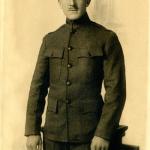
Diary, personal letters and photos of Edmond Arthur Littlefield principally from his service in the American Field Service during World War I. Other items include pre and post WWI letters and photos.
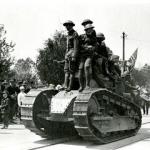
Photographs and a video clip of the Armistice Parade that took place in Ogden, Utah in 1919. They include photographs of the troops returning from war, various women's groups like the American Red Cross, and school children. These photographs were donated by Richard Roberts.
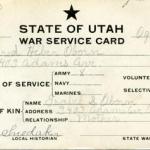
Service cards of men and women from Weber County that served during World War I. They include their home address, next of kin, the branch of service, entrance date, discharge date, and remarks such as where they served and if killed in action. Included in this collection are notable names such as Browning, Scowcroft, Bernard DeVoto, Lawrence Dee, and Edmund Littlefield.
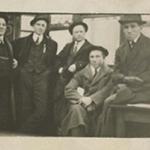
Stanley Purrington was originally from Ogden, Utah and joined the Army in 1918. He and sixty other young men from Ogden were sent to Camp Fremont, California for training. Upon completion of his training he was dispatched to France to become part of the occupying forces at Camp Pontanezen. During his time there, he was a battalion sergeant major in the 8th Infantry. Purrington returned home to Ogden on August 30, 1919. The diaries in this collection detail his time in service from August 12, 1918 to March 26, 1919 and May 29, 1919 to Sept. 28, 1919, along with his experiences overseas.
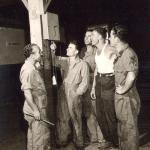
The Prisoners of War at Defense Depot Ogden Camp was in operation from 1942 to 1946. The collection includes correspondence between German and Italian prisoners and their families; weekly newsletters produced by the prisoners; oral histories conducted with the widows of German and Italian POWS, former guards, and community members that worked with the POWS; and finally a rich collection of 137 photographs documenting the Defense Depot Ogden Camp.